How to Pay With Crypto in 2026 — 5 Methods Compared
Learn the 5 ways to pay with crypto in 2026: payment gateways, crypto cards, Lightning Network, P2P, and gift cards. We break down fees, speed, and privacy for each method.
Key Takeaways
- There are 5 distinct methods to pay with crypto in 2026 — each with different trade-offs on fees, speed, and privacy
- Payment gateways (NOWPayments, BTCPay Server) are the cheapest for online merchants at 0-0.5% fees
- Lightning Network enables instant Bitcoin payments with fees under $0.01 — the fastest option
- Crypto payments are 50-90% cheaper than credit cards, which charge 2.9% + $0.30 per transaction
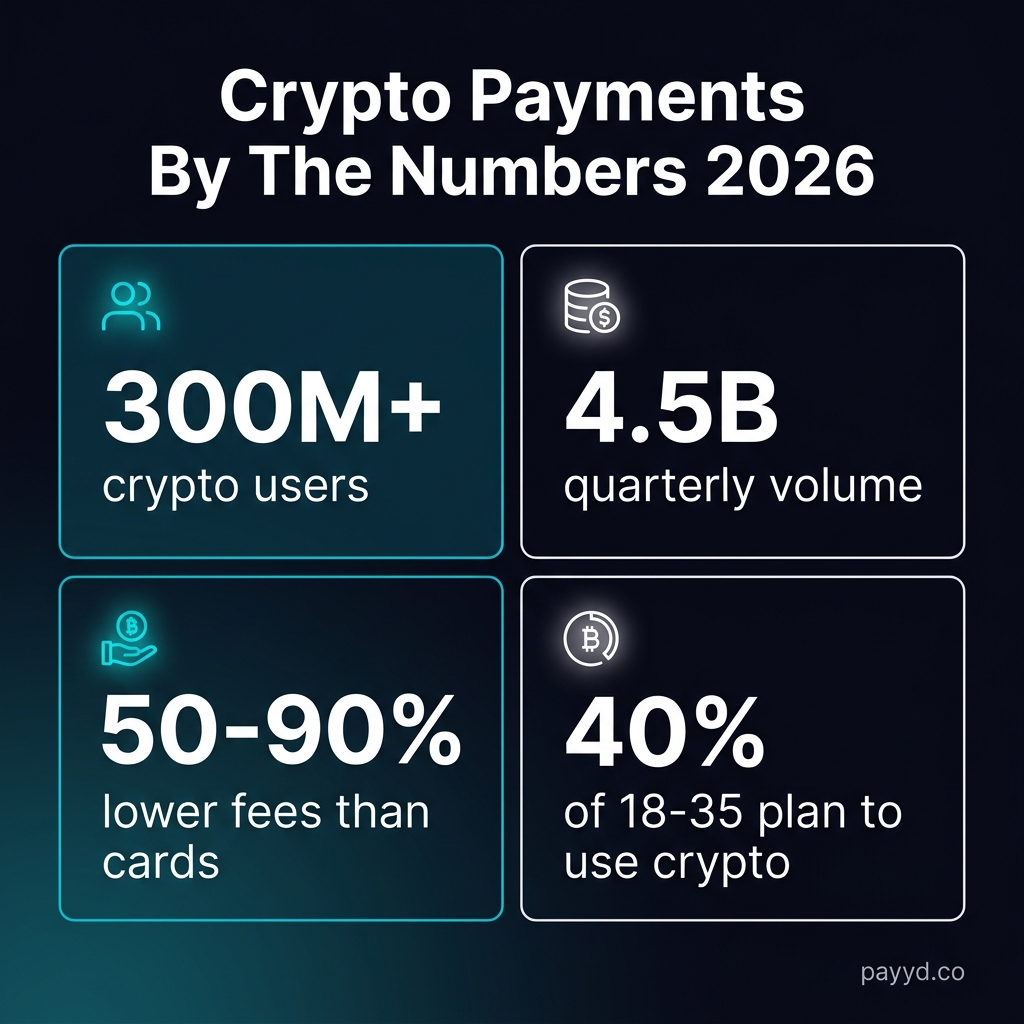
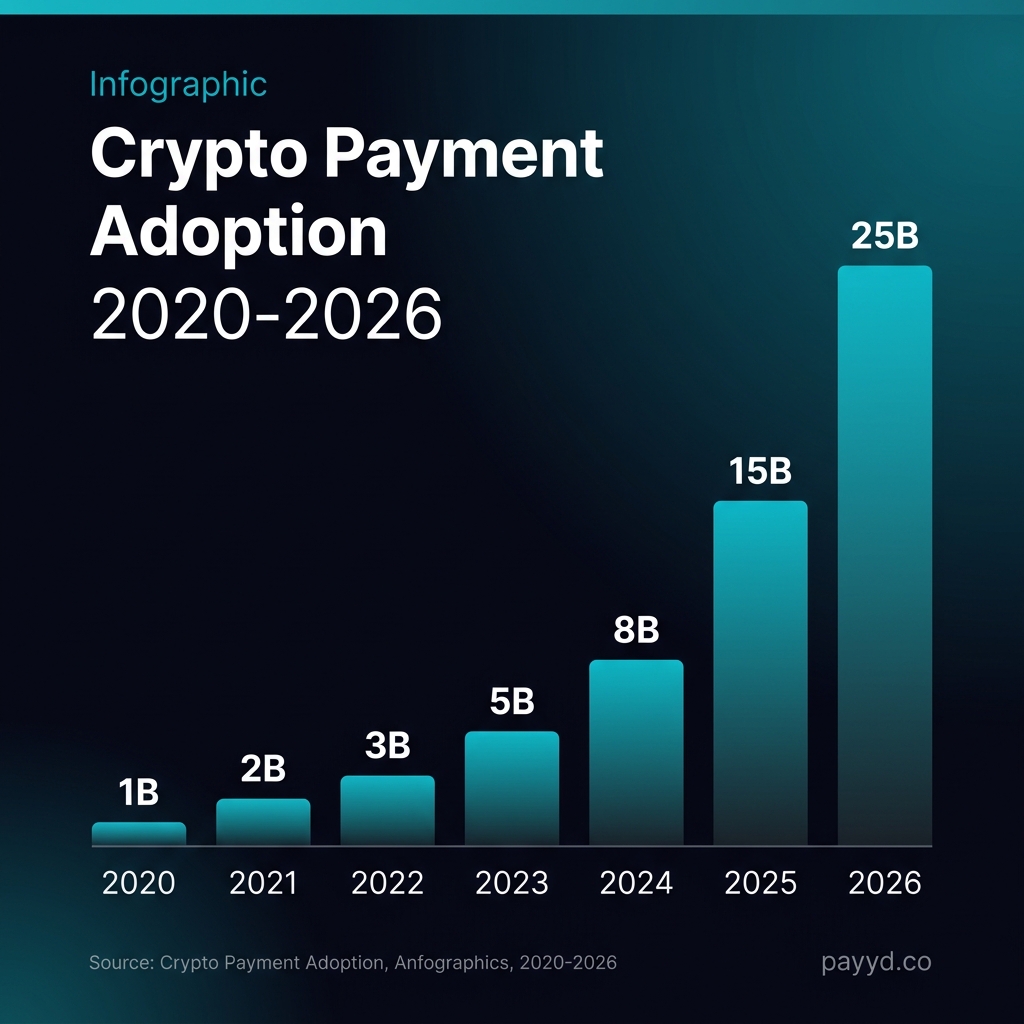
- 300M+ people now hold crypto, and $4.5B was processed in Q1 2026 alone
Table of Contents
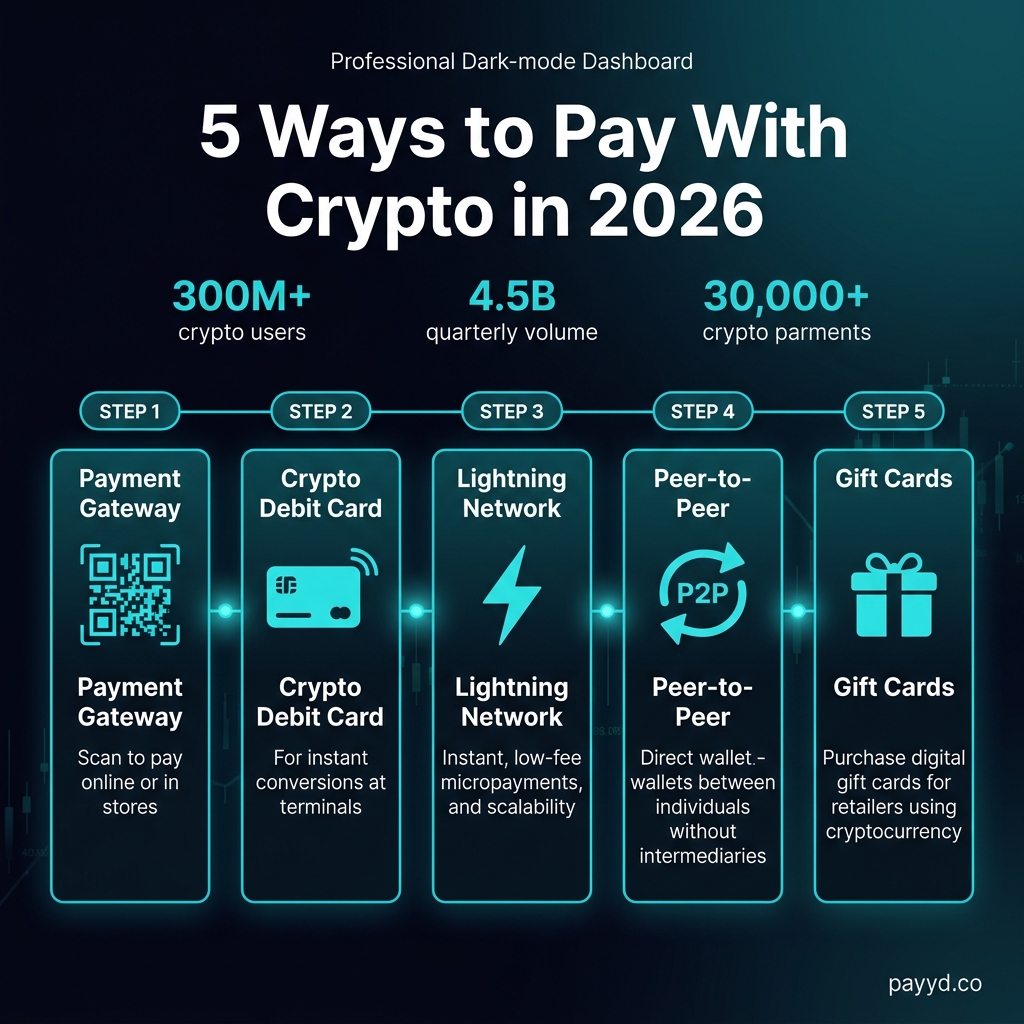
Paying with crypto in 2026 isn't just for tech enthusiasts anymore. Over 300 million people hold cryptocurrency, and quarterly transaction volume hit $4.5 billion in Q1 2026. But "pay with crypto" means different things depending on your situation — are you buying coffee, paying a contractor, or accepting payments for your business?
We tested all five major methods and compared them on what actually matters: fees, speed, privacy, and which merchants accept them. Here's what we found.
Why Pay With Crypto?
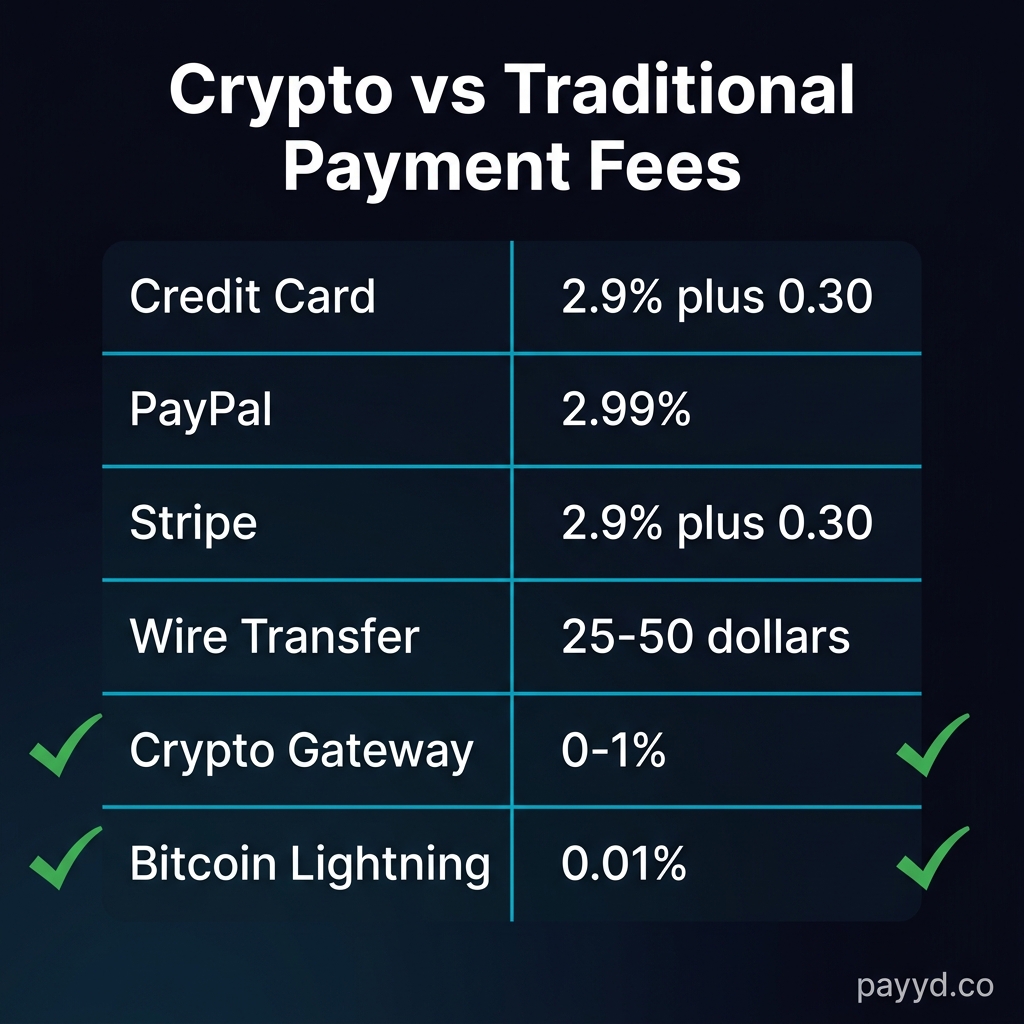
The short answer: it's cheaper and faster than traditional payments. Credit cards charge merchants 2.9% + $0.30 per transaction. PayPal takes 2.99%. Wire transfers cost $25-50 and take days. Crypto payment gateways charge 0-1% and settle in minutes.
For consumers, crypto payments offer privacy (no bank tracking your purchases), global access (no currency conversion fees), and speed (Lightning Network settles in under a second). For businesses, it means lower fees and access to the 300M+ crypto-holding customer base.
Method 1: Payment Gateways (Best for Businesses)
Crypto payment gateways are the merchant equivalent of Stripe or Square. A customer selects "pay with crypto" at checkout, chooses their coin, scans a QR code, and the gateway confirms payment and notifies the merchant. Fees range from 0% (BTCPay Server) to 1% (BitPay).
We've tested all 27 major gateways. The standouts:
NOWPayments
0.5% fee, 300+ coins, 7 plugins. Best all-rounder.
BTCPay Server
0% fee, self-hosted, open source. Best for sovereignty.
BlockBee
0.25% fee, 7 plugins, no KYC. Best value.
Best for: Online stores, SaaS companies, freelancers invoicing clients. If you run a business and want to accept crypto, start here.
Method 2: Crypto Debit Cards (Best for Everyday Spending)
Crypto debit cards (Visa/Mastercard-branded) let you spend crypto anywhere that accepts cards. You load crypto onto the card, and it auto-converts to fiat at the point of sale. CryptoPay and BitPay both offer these.
The catch: conversion spreads are typically 1-3%, and most require KYC. You're paying a premium for convenience. But if you want to buy groceries with Bitcoin, this is the most practical method right now.
Best for: Daily spending, travel, anywhere that doesn't directly accept crypto.
Method 3: Lightning Network (Best for Speed)
The Lightning Network is a layer-2 Bitcoin protocol that enables instant payments with fees under $0.01. A $100 Bitcoin payment on-chain costs $2-20 in fees and takes 10-60 minutes. The same payment on Lightning costs $0.001 and settles in under a second.
BTCPay Server is the best way to accept Lightning payments for your business. For sending, wallets like Phoenix, Muun, and Zeus handle Lightning natively.
Best for: In-store payments, micropayments, tipping, any scenario where speed matters.
Method 4: Peer-to-Peer (Best for Privacy)
The simplest method: send crypto directly from your wallet to someone else's wallet address. No gateway, no intermediary, no KYC. Just a blockchain transaction between two parties.
P2P is the most private method but also the least convenient. There's no dispute resolution, no refunds, and the recipient must have a wallet. For no-KYC transactions between known parties, it's the gold standard.
Best for: Paying contractors, splitting bills with friends, remittances, privacy-focused transactions.
Method 5: Gift Cards (Best for Retail)
Services like Bitrefill and CoinGate let you buy gift cards (Amazon, Steam, Uber, DoorDash) with crypto. You pay BTC or ETH, get a gift card code instantly. Then use the gift card at the retailer.
It's an indirect method but gives you access to hundreds of retailers that don't directly accept crypto. Our full guide covers the best platforms.
Best for: Shopping at retailers that don't accept crypto directly, anonymizing purchases.
Fee Comparison: All 5 Methods
| Method | Fee | Speed | Privacy | Best For |
|---|---|---|---|---|
| Payment Gateway | 0-1% | 1-60 min | Medium | Businesses |
| Crypto Card | 1-3% | Instant | Low | Daily spending |
| Lightning | <$0.01 | <1 sec | Medium | Speed |
| P2P | Network fee | 1-60 min | High | Privacy |
| Gift Cards | 2-5% | Instant | High | Retail |
Which Method Should You Use?
You run an online store? → Payment gateway. Start with NOWPayments (easiest) or BTCPay Server (cheapest).
You want to spend crypto daily? → Crypto debit card. CryptoPay or BitPay card.
You need instant Bitcoin payments? → Lightning Network.
You pay contractors or friends? → P2P from any crypto wallet.
You want to shop at Amazon/Steam? → Gift cards via Bitrefill.
Frequently Asked Questions
Is it legal to pay with crypto?
In most countries, yes. Crypto is legal tender in El Salvador and the Central African Republic. In the US, EU, UK, and most of Asia, crypto payments are legal but subject to capital gains tax — you may owe taxes on the difference between purchase price and spending price.
What's the cheapest way to pay with crypto?
Lightning Network (under $0.01) for Bitcoin, or stablecoins on Tron/Solana (under $0.01) for USDT/USDC. On-chain Bitcoin is the most expensive at $2-20 per transaction.
Can I pay with crypto without KYC?
Yes. P2P payments, no-KYC payment gateways like BTCPay Server and Coinremitter, and Lightning Network all work without identity verification. Crypto debit cards require KYC.
What's the most widely accepted cryptocurrency for payments?
Bitcoin (BTC) is accepted by the most merchants, followed by Ethereum (ETH) and USDT. Stablecoins (USDT, USDC) are increasingly preferred because they avoid volatility — the merchant receives exactly the dollar amount quoted.
Do I need a special wallet to pay with crypto?
Any crypto wallet works for basic payments. For Lightning Network, you need a Lightning-compatible wallet (Phoenix, Zeus, Muun). For Solana Pay, you need a Solana wallet (Phantom, Solflare). Most wallets support the major chains.