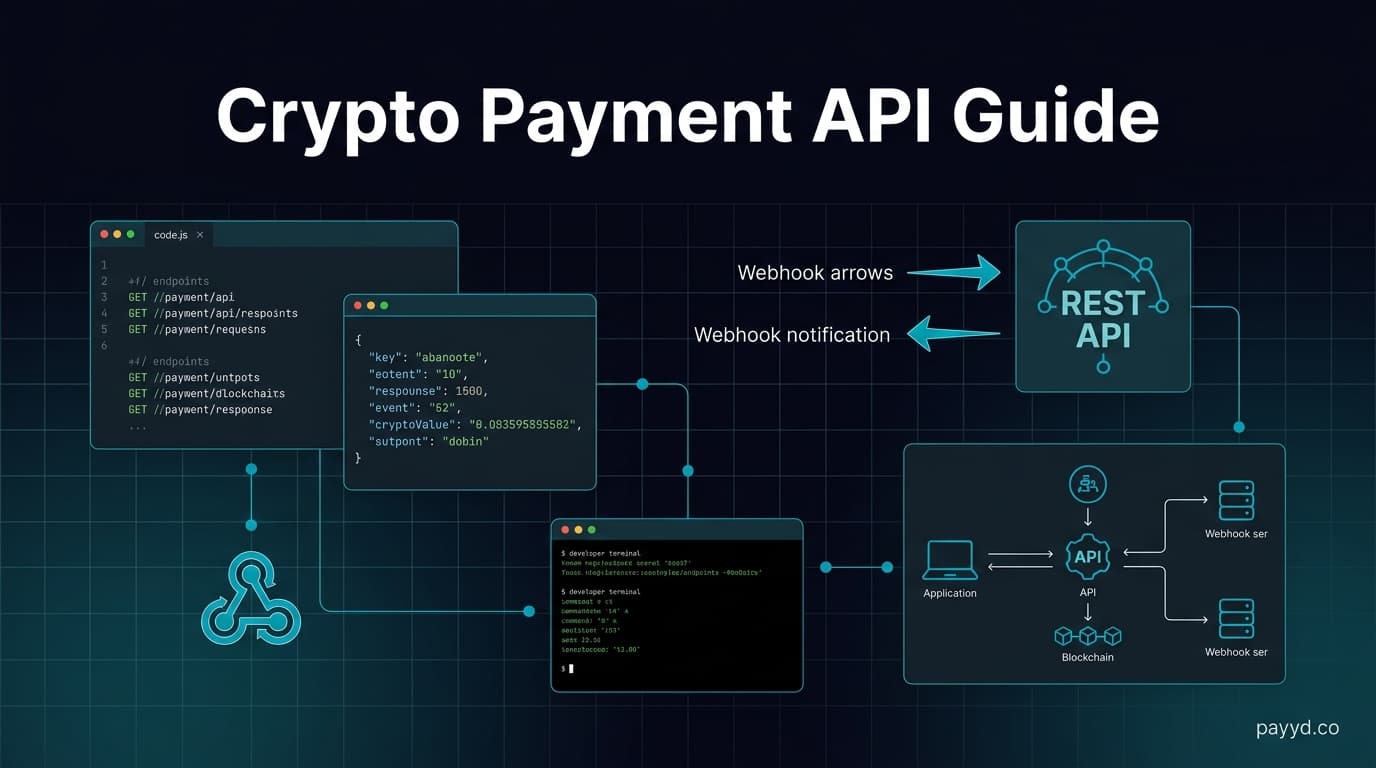
Banked API Guide 2026: Pay-by-Bank Payments vs Crypto Gateway APIs
What the Banked API does, how pay-by-bank pricing works, real fee math on $100/$1,000/$10,000 sales, and when a crypto payment API is the better rail.
Key Takeaways
- Banked is a pay-by-bank (account-to-account) API: customers pay by bank transfer through their own banking app, no card networks involved, fees around 0.5-1% vs 2.9% + $0.30 for cards
- Banked wins for UK/EU domestic fiat checkout where customers hold accounts at open-banking-connected banks; US coverage exists via partnerships but conversion is weaker
- Crypto gateway APIs win for global reach, borderless payments, protocol-level finality, and customers without local bank rails: NOWPayments [Gold tier] at 0.5% with 300+ coins is the default
- Cheapest possible rail: BTCPay Server [Bronze tier], self-hosted, 0% fees plus roughly $10/mo server cost, for technical teams wanting full control
- The strongest 2026 stack is both: pay-by-bank for domestic UK/EU fiat, a crypto API for everyone else; the integration patterns are nearly identical
Table of Contents
- What Banked is and how account-to-account payments work
- The Banked API: integration flow, hosted checkout, webhooks
- Geographic coverage: where pay-by-bank actually converts
- Pay-by-bank pricing vs card fees
- Fee math: $100, $1,000, $10,000 across four rails
- Pay-by-bank APIs vs crypto gateway APIs
- The crypto API shortlist if Banked does not fit
- Verdicts by use case
- FAQ
What Banked is and how account-to-account payments work
Banked (banked.com) is one of the better-known pay-by-bank companies. The product is account-to-account (A2A) payments: instead of typing a card number at checkout, the customer clicks "Pay by bank," picks their bank from a list, gets bounced into their own banking app, approves the payment with Face ID or their banking PIN, and the money moves directly from their bank account to the merchant's account. No card number is entered, no card network sits in the middle, and no intermediary holds the funds in the card-scheme sense.
The rails underneath are open banking. In the UK and EU, regulation (UK Open Banking and PSD2 respectively) forces banks to expose payment-initiation APIs to licensed third parties. Banked is one of those licensed third parties. It aggregates thousands of bank connections behind one API, handles the redirect-and-authenticate dance per bank, and gives the merchant a single integration and a single settlement view. Payments ride real-time schemes (Faster Payments in the UK, SEPA Instant in much of the EU), so the merchant typically sees cleared funds in seconds to minutes rather than the 2-7 day card settlement cycle.
For a developer the mental model is simple: it is a redirect-based payment flow, closer to "Pay with PayPal" ergonomics than to a card form, except the thing the customer authenticates against is their own bank. There is no PCI scope because no card data ever touches your stack, and there are no card-network chargebacks because there is no card network.
The Banked API: integration flow, hosted checkout, webhooks
Banked's integration surface follows the same shape as every modern payment API, which is good news if you have integrated Stripe or a crypto gateway before. The core objects are payment sessions and webhooks:
- Create a payment session. Your server calls the API with an amount, currency, reference, and success/failure redirect URLs. You get back a session ID and a checkout URL.
- Redirect to hosted checkout. The customer lands on Banked's hosted page (or an embedded flow), selects their bank, and is deep-linked into their banking app to approve. On mobile this is app-to-app; on desktop it is usually a QR code that opens the bank app on the phone.
- Listen for webhooks. Banked posts payment-state events (pending, sent, settled, failed) to your webhook endpoint. You fulfil the order on the settled event, exactly as you would on a crypto gateway's payment-confirmed IPN.
- Reconcile. Funds arrive in the merchant bank account with the reference you set, and the dashboard/API gives you settlement reporting.
If that flow sounds familiar, it should: it is structurally identical to the invoice-plus-webhook pattern every crypto gateway uses, which we walk through in our crypto payment API guide. The engineering difference is small; the business difference (who can pay, what it costs, how final the payment is) is where the real decision lives.
Two integration caveats worth knowing before you commit. First, Banked is a sales-led product: you talk to their team, get onboarded as a merchant (full KYB, this is a regulated payments company), and pricing is negotiated rather than published on a self-serve pricing page. Expect days to weeks, not the ten-minute email signup a no-KYC crypto gateway offers. Second, checkout conversion depends on bank coverage: if a customer's bank is not connected or their banking app UX is poor, they abandon. In the UK this is largely solved; elsewhere it varies.
Geographic coverage: where pay-by-bank actually converts
Pay-by-bank lives and dies on bank participation, and that is a function of regulation.
UK: excellent. Open Banking has been mandatory for the big banks since 2018, coverage is near-universal, and consumers are increasingly used to approving payments in their banking app. HMRC, the UK tax authority, collects billions via pay-by-bank. This is Banked's home turf and the place where an A2A checkout genuinely converts.
EU: good and improving. PSD2 mandates the APIs, SEPA Instant adoption keeps growing, and coverage in markets like the Netherlands (where iDEAL trained a whole population to pay by bank) is strong. Quality varies by country and by bank.
US: partnership-driven, uneven. There is no US open-banking mandate with teeth yet, so pay-by-bank rides FedNow, RTP, and screen-scraping-era aggregator connections. Banked's US presence runs through processor and network partnerships rather than direct universal bank coverage. It works, but expect lower checkout conversion than the UK and a more enterprise-shaped sales process.
Rest of world: mostly absent. If your customers are in Latin America, Africa, South Asia, or anywhere without open-banking rails, a pay-by-bank API simply has nothing to connect to. This is the single biggest structural difference from crypto rails, and we cover the merchant-side picture in websites that accept bank payments and crypto.
Pay-by-bank pricing vs card fees
Banked does not publish a rate card; pricing is negotiated per merchant. Industry-wide, pay-by-bank pricing clusters around 0.5% to 1% per transaction, sometimes with a small fixed component, sometimes capped per transaction for large amounts. The pitch is straightforward: card processing through a Stripe-style aggregator costs roughly 2.9% + $0.30, of which the bulk is interchange and scheme fees that pay-by-bank simply does not incur. No interchange, no scheme fees, no PCI compliance cost, no chargeback fees.
The honest caveats: negotiated pricing means small merchants may not get the headline low rate, some providers charge minimum monthly fees, and refunds on A2A rails are an API-initiated bank transfer back to the customer rather than a card refund, which your support tooling has to handle. And while card-network chargebacks disappear, UK/EU consumer-protection schemes for authorized-push-payment fraud mean bank payments are not as final as crypto: a bank can still claw a payment back in a fraud scenario. Crypto is the only rail here with protocol-level finality.
Fee math: $100, $1,000, $10,000 across four rails
Same sale, four rails. Cards modeled at 2.9% + $0.30 (Stripe-style). Pay-by-bank modeled at the industry-typical 0.5-1% band since Banked negotiates per merchant. NOWPayments at its published 0.5% (USDT-TRC20 flow, network fee roughly $1). BTCPay Server at 0%, with the customer paying roughly $1 in network fees and the merchant paying about $10/mo for a VPS, which we exclude from per-sale math.
| Sale | Cards (2.9% + $0.30) | Banked / pay-by-bank (0.5-1%) | NOWPayments (0.5%) [Gold] | BTCPay Server (0%) [Bronze] |
|---|---|---|---|---|
| $100 | $3.20 fee, net $96.80 | $0.50 - $1.00 fee, net $99.00 - $99.50 | $0.50 fee, net $99.50 | $0 fee, net $100 |
| $1,000 | $29.30 fee, net $970.70 | $5 - $10 fee, net $990 - $995 | $5 fee, net $995 | $0 fee, net $1,000 |
| $10,000 | $290.30 fee, net $9,709.70 | $50 - $100 fee, net $9,900 - $9,950 | $50 fee, net $9,950 | $0 fee, net $10,000 |
Read across the $10,000 row: cards cost $290.30, pay-by-bank and NOWPayments both land in the $50-$100 band, and BTCPay is free apart from the ~$10/mo server. The card-fee gap is the entire commercial argument for both Banked and crypto rails; between pay-by-bank and crypto the fee difference is a rounding error, so the decision comes down to reach, finality, and onboarding, not price.
Pay-by-bank APIs vs crypto gateway APIs
Both rails cut out the card networks and both integrate the same way (create session, redirect or show payment target, listen for webhooks). Here is where they actually differ:
| Dimension | Banked / pay-by-bank | Crypto gateway API (NOWPayments, Cryptomus) |
|---|---|---|
| Geographic reach | UK/EU strong, US via partnerships, rest of world absent | Global, anyone with a wallet and internet |
| Fee | ~0.5-1%, negotiated | 0.4-1% published (NOWPayments 0.5%), BTCPay 0% |
| Onboarding / KYC | Full KYB, sales-led, days to weeks | Email signup, minutes; KYB only at scale (~$50k/mo at NOWPayments) |
| Settlement speed | Seconds to minutes (Faster Payments, SEPA Instant) | Minutes (1-2 confirmations), settles to your wallet |
| Payment finality | No card chargebacks, but bank recalls and APP-fraud reimbursement exist | Final at protocol level once confirmed |
| Currencies | Fiat only (GBP, EUR, USD where supported) | 300+ coins at NOWPayments incl. BTC, USDT, XMR; auto-convert to stablecoin |
| High-risk / privacy verticals | Regulated entity, restricted verticals apply | Far more permissive; BTCPay has no operator at all |
| Customer requirement | Bank account at a connected bank, banking app in hand | A crypto wallet with funds |
Where Banked genuinely wins: a UK or EU merchant selling to domestic customers in fiat. The checkout converts because customers trust their banking app, settlement is instant, fees crush cards, and your accountant receives ordinary bank transfers with clean references. If that describes your business, pay-by-bank is the honest recommendation and no crypto gateway replaces it, because your customers do not hold crypto.
Where crypto gateway APIs win: everywhere the bank rails stop. Global audiences, cross-border sales, customers in countries without open banking, privacy-sensitive verticals a regulated PSP will not onboard, merchants who want payments that cannot be recalled, and teams that want to start accepting payments this afternoon without a sales call. For a side-by-side of the actual crypto providers, see our crypto pay API comparison.
Need the global half of the stack?
NOWPayments: 0.5% fee, 300+ coins, REST API and webhooks, no KYC to start. Live in minutes, not weeks.
Get a NOWPayments API Key →The crypto API shortlist if Banked does not fit
If your customers are global, unbanked-for-your-purposes, or privacy-minded, these are the four crypto gateways worth an engineer's afternoon. All follow the same create-invoice-then-webhook pattern covered in our payment gateway integration API guide.
NOWPayments [Gold tier], the default crypto API
0.5% fee, 300+ coins including USDT on cheap networks and Monero for privacy-leaning customers, auto-conversion to a single settlement coin, and no KYC at signup (KYB triggers around $50k/month). The API mirrors the Banked flow closely enough that you can abstract both behind one internal payments interface: POST an invoice, get a payment URL, listen for the IPN webhook, fulfil on confirmation. Sign up for NOWPayments.
Cryptomus [Silver tier], the low-fee hosted alternative
Slightly cheaper headline pricing (0.4% on many flows), solid API docs, recurring-billing support, and good stablecoin coverage. Fewer coins than NOWPayments and a younger track record, which is why it sits a tier lower, but for a SaaS billing in USDT it is a genuinely competitive second option. Try Cryptomus.
CoinGate [Bronze tier], when you want fiat settlement
CoinGate's 1% fee is double NOWPayments, but it settles to EUR via SEPA, which makes it the crypto gateway that behaves most like a traditional PSP. If your finance team wants crypto acceptance with bank-account settlement, it bridges the two worlds this article compares. Details in our CoinGate review, or sign up for CoinGate.
BTCPay Server [Bronze tier], 0% and fully yours
Self-hosted, open-source, non-custodial, 0% fees; your only cost is roughly $10/month for a VPS. There is no operator to onboard you, price you, or drop you. We earn nothing recommending it, and it is still the right answer for technical teams that want full control of the payment stack and protocol-level finality. The trade-off is that you run it: updates, backups, wallet management. Read our BTCPay Server review before choosing it as your only rail.
Verdicts by use case
"UK/EU ecommerce or SaaS, domestic customers, fiat pricing"
Banked (or another pay-by-bank provider) wins. Your customers have banking apps, coverage is near-universal, fees are 65-85% below cards, and settlement is instant. A crypto API adds nothing here unless a slice of your audience asks for it.
"Global SaaS or digital product, customers on five continents"
NOWPayments [Gold tier] wins. Pay-by-bank has no rails in most of the world; a wallet works everywhere. 0.5% fee, 300+ coins, USDT auto-convert so you never hold volatile assets.
"Chargeback and fraud-recall elimination is the whole point"
Crypto wins outright. Pay-by-bank removes card chargebacks but keeps bank recalls and APP-fraud reimbursement exposure. A confirmed crypto payment is final. NOWPayments [Gold tier] hosted, or BTCPay Server [Bronze tier] if you also want custody.
"Technical team, wants 0% fees and zero third-party dependency"
BTCPay Server [Bronze tier] wins, honestly and by a mile. 0% fees, no operator, no onboarding. Banked cannot compete on this axis; neither can any hosted crypto gateway.
"Finance team wants crypto acceptance but bank settlement"
CoinGate [Bronze tier]. Crypto in, EUR out via SEPA at 1%. It is the middle path between Banked's fiat world and a pure crypto stack, and pairs naturally with the payables side covered in our accounts payable API guide.
"Best of both: UK/EU base plus international customers"
Run both rails. Banked for domestic fiat, NOWPayments [Gold tier] or Cryptomus [Silver tier] for everyone else. Both are session-plus-webhook APIs, so one internal payments abstraction covers both with a day of engineering.
Ship the crypto rail this afternoon
While pay-by-bank onboarding runs its KYB course, NOWPayments takes an email and an API key. 0.5% fee, 300+ coins, webhook-driven.
Start with NOWPayments →FAQ
What is the Banked API?
Banked is a pay-by-bank (account-to-account) payments company. Its API lets merchants offer a bank-transfer checkout: the customer picks their bank, approves in their banking app, and funds move directly over open-banking rails. Integration is a hosted checkout or REST API with webhooks, with no card networks and no PCI scope.
How much does pay-by-bank cost compared to cards?
Typically 0.5% to 1% per transaction versus roughly 2.9% + $0.30 for cards. On a $1,000 sale that is $5-$10 versus $29.30, roughly 65-85% cheaper. Banked itself negotiates pricing per merchant rather than publishing a rate card.
Does Banked work in the US?
Via partnerships, yes, riding FedNow and RTP rails. But without a US open-banking mandate, bank coverage is uneven and checkout conversion is lower than in the UK or EU, where regulation forces universal bank participation.
Pay-by-bank vs crypto payments: which is cheaper?
Nearly a tie on fees: pay-by-bank around 0.5-1%, NOWPayments at 0.5%, BTCPay Server at 0% plus ~$10/mo server costs. The decision hinges on reach (crypto is global, pay-by-bank is not), finality (crypto is final, bank transfers can be recalled), and onboarding speed (minutes vs weeks).
Do pay-by-bank payments have chargebacks?
No card-network chargebacks exist because there is no card. But banks can recall transfers in fraud cases, and UK/EU consumer-protection schemes can force reimbursement for authorized-push-payment fraud. Only crypto offers protocol-level finality once a payment confirms.
Can I use both pay-by-bank and crypto at the same checkout?
Yes, and many merchants should. Pay-by-bank for UK/EU domestic customers, a crypto gateway like NOWPayments for international and privacy-minded buyers. Both use the same session-plus-webhook integration pattern, so one internal abstraction handles both rails.
Affiliate disclosure: payyd.co earns a commission when readers sign up for NOWPayments, Cryptomus, or CoinGate through our /go/ links. We have no affiliate relationship with Banked or BTCPay Server, and we recommend both where they genuinely fit (Banked for UK/EU domestic fiat checkout, BTCPay for technical teams wanting 0% fees and full control). Our gateway tiering is based on payyd's editorial criteria, not commission rates.