BitPay Review 2026: The OG Crypto Payment Gateway — Still Worth It?
Honest BitPay review covering fees, KYC, wallet, debit card, POS terminal, and bill pay. Is BitPay still worth it in 2026 with cheaper alternatives available?
TL;DR — BitPay Review
BitPay is the longest-running crypto payment gateway (since 2011) and the safest choice for businesses that want fiat settlement — accept Bitcoin, receive USD. The trade-off: 1% fees, full KYC, and a narrower coin selection than newer competitors. It is reliable and battle-tested, but no longer the best value.
BitPay has been processing crypto payments since 2011 — longer than any other gateway on this list. In an industry where projects launch and disappear within months, that longevity means something. But longevity alone does not make it the best choice in 2026. Newer competitors offer lower fees, broader coin support, and far less friction to get started.
I have tested BitPay alongside every major alternative. This review covers what BitPay does well, where it falls short, and whether the "safe choice" is actually worth the premium you pay for it.
What Is BitPay?
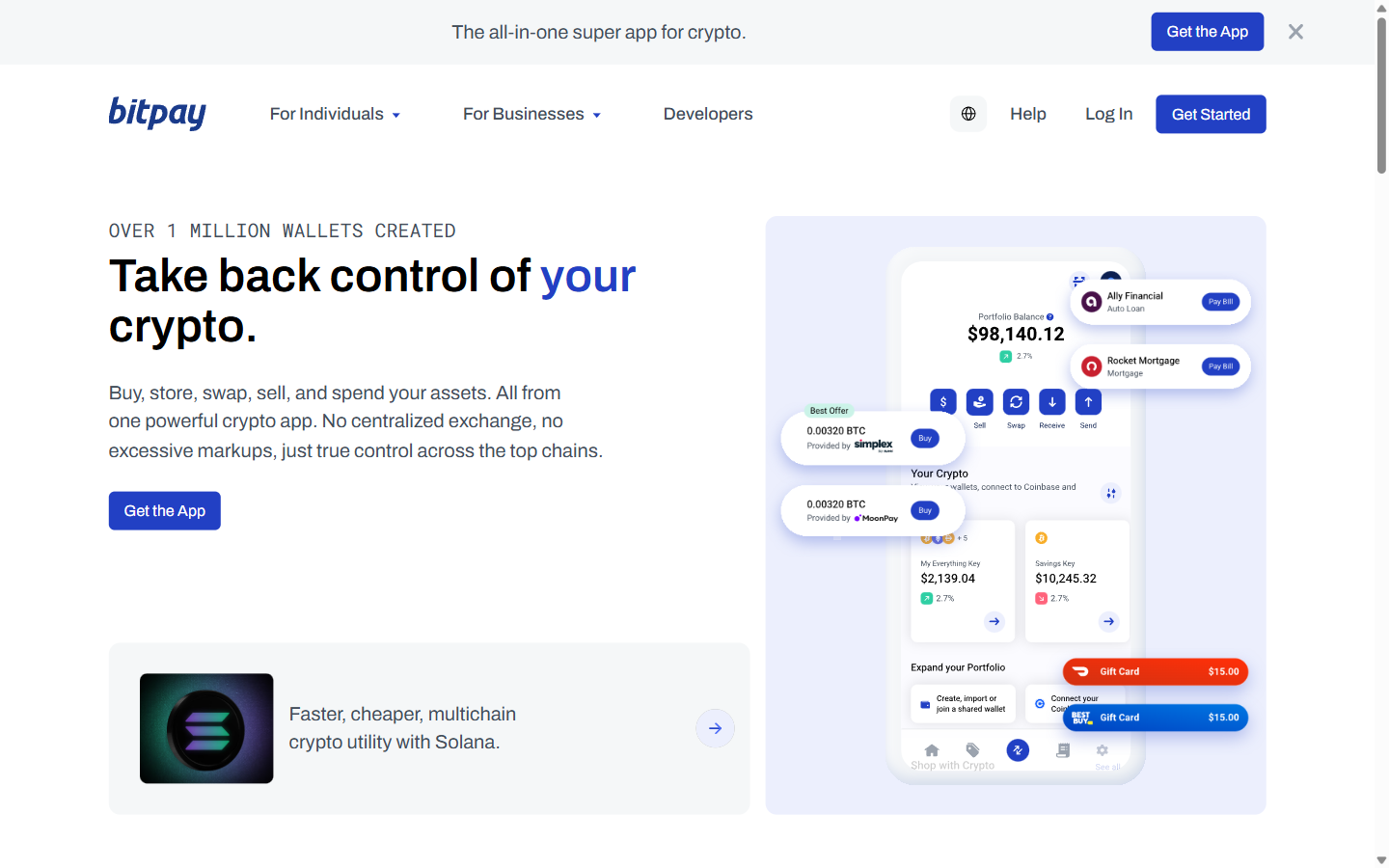
BitPay is a crypto payment processing company headquartered in Atlanta, Georgia. Founded in 2011 by Stephen Pair and Tony Gallippi, it was one of the first companies to make Bitcoin payments practical for businesses. They have processed over $10 billion in payments and serve merchants in 229 countries.
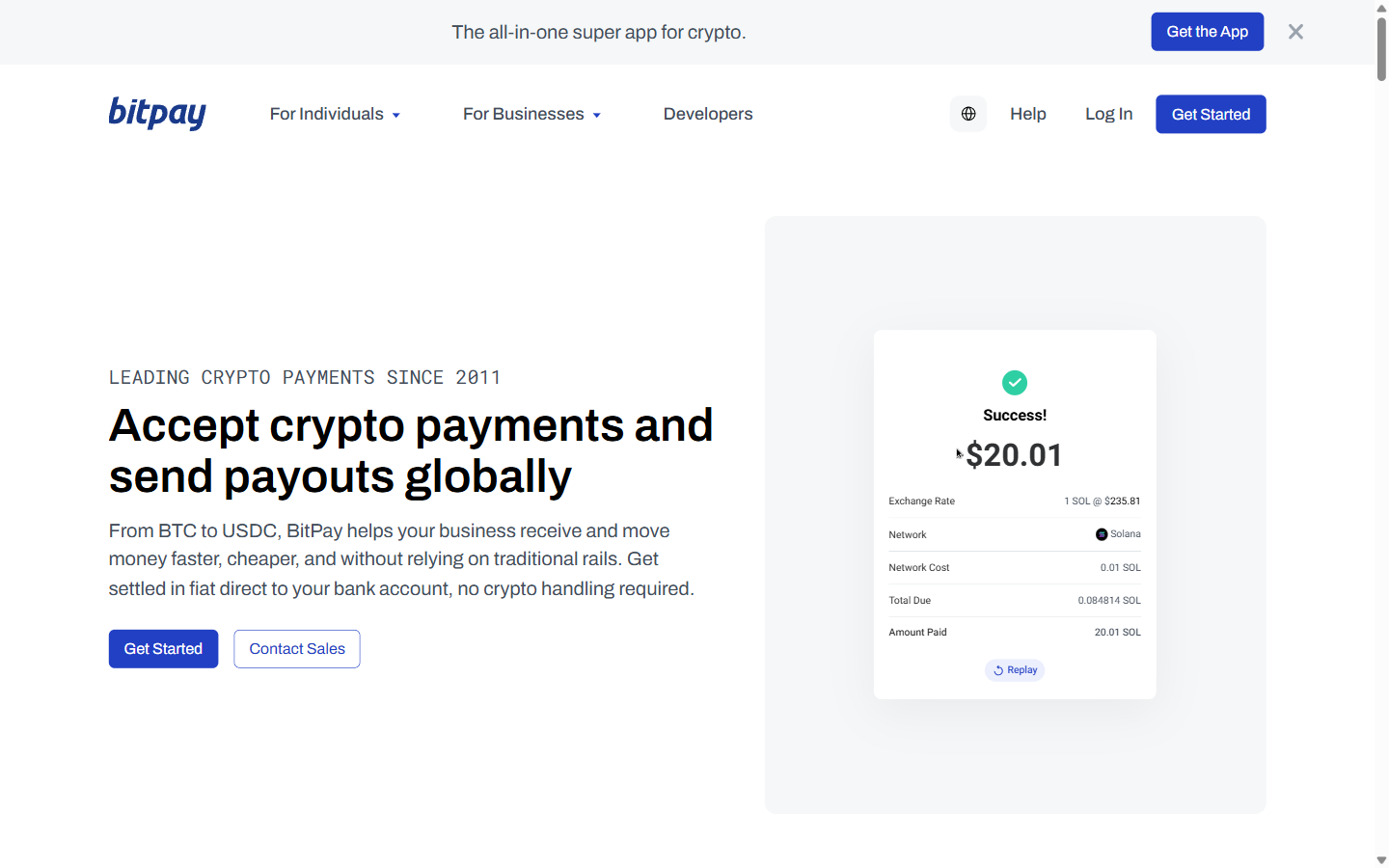
What sets BitPay apart from newer gateways is its focus on the traditional business model: you accept crypto from customers, and BitPay converts it to fiat currency and deposits USD (or EUR, GBP) directly into your bank account. You never have to hold crypto if you do not want to. For businesses in regulated industries or those uncomfortable with crypto volatility, this is the killer feature.
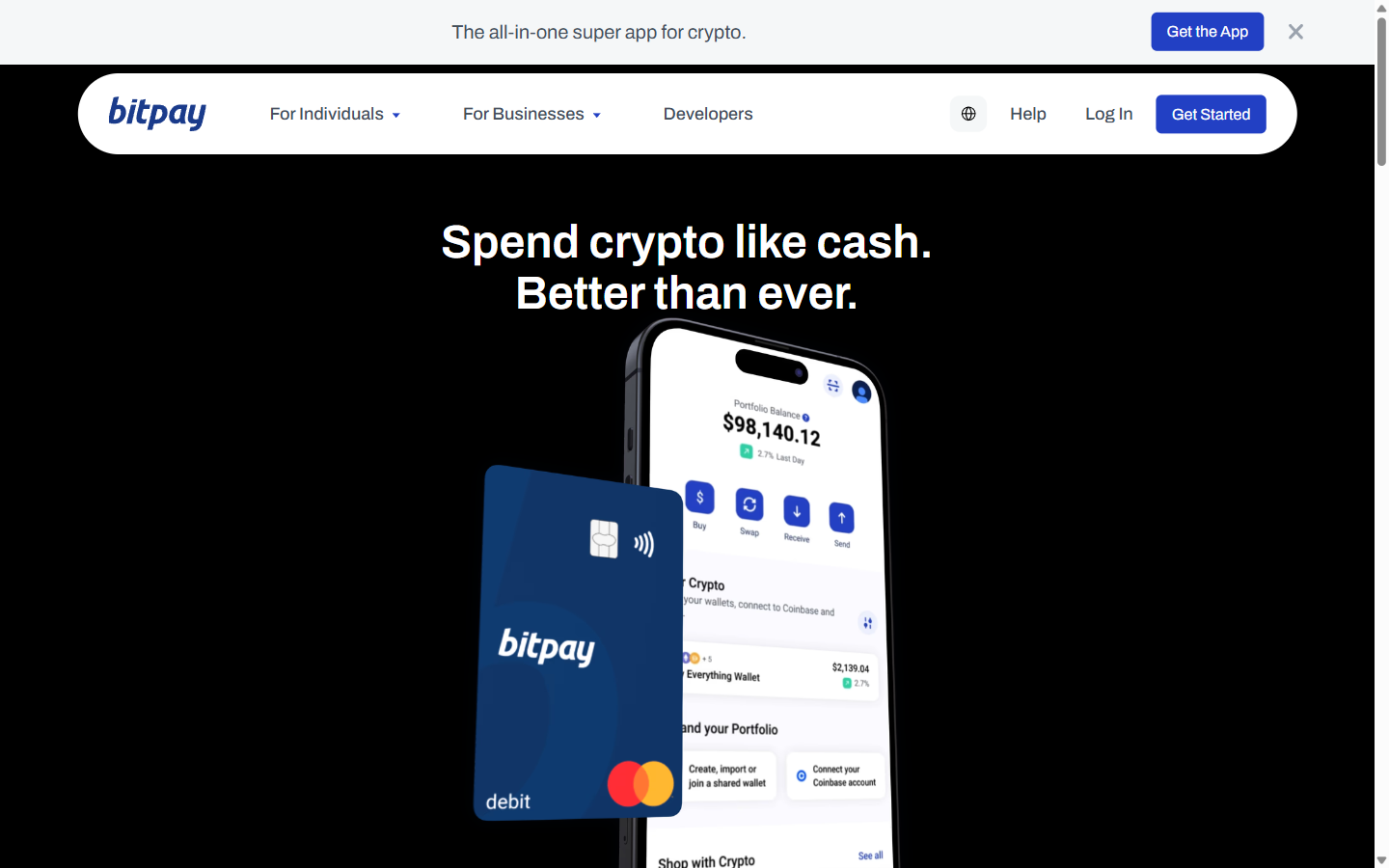
BitPay also offers a consumer-facing ecosystem: the BitPay Wallet (non-custodial), a prepaid Mastercard debit card, and a bill pay service that lets consumers use crypto to pay for utilities, rent, and other bills. This dual focus — merchants and consumers — gives BitPay a broader reach than pure B2B gateways.
How BitPay Works
The BitPay payment flow is straightforward:
- Customer selects crypto payment at checkout on your website or POS terminal
- BitPay generates an invoice with the crypto amount and a QR code (locked for 15 minutes)
- Customer pays from any compatible wallet — BitPay Wallet, Coinbase, MetaMask, or any standard wallet
- BitPay confirms payment and notifies your platform (webhook/IPN callback)
- BitPay settles in fiat — converts the crypto and deposits USD to your bank the next business day
The entire process takes about 15 minutes for Bitcoin on-chain payments. For Lightning Network transactions, it is near-instant. The 15-minute payment window protects BitPay (and you) from exchange rate volatility — once the customer initiates payment, the rate is locked.
Pricing and Fees
BitPay charges a flat 1% transaction fee on all payments. There is no monthly fee, no setup fee, and no minimum volume requirement. Settlements to your bank account are free.
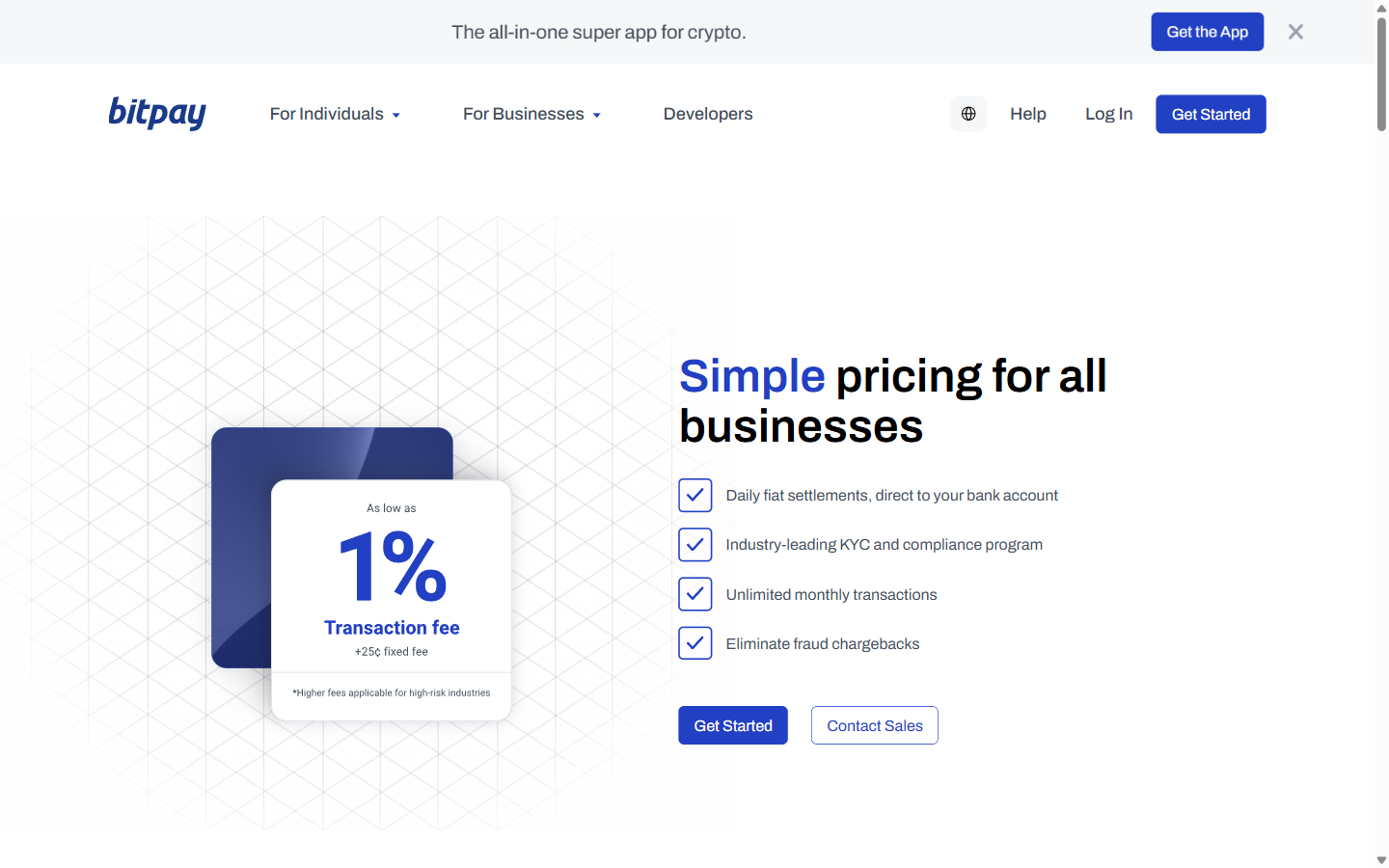
At 1%, BitPay is the most expensive gateway on our comparison list. For context: NOWPayments charges 0.5%, Coinremitter charges 0.23%, and BTCPay Server charges 0%. On $100,000 in monthly sales, that 1% fee costs you $1,000/month — versus $500 at NOWPayments or $0 at BTCPay.
The counterargument: BitPay's 1% includes fiat settlement. Most cheaper gateways do not convert to USD for you — you receive crypto and handle the conversion yourself. If you account for exchange fees and volatility risk, BitPay's effective cost is more competitive than the raw percentage suggests.
Features Deep-Dive
Fiat Settlement
This is BitPay's strongest advantage. You receive USD, EUR, or GBP directly in your bank account — typically the next business day. No need to create exchange accounts, manage wallets, or worry about crypto price swings. For businesses that want crypto as a payment method without actually holding crypto, this is the feature that justifies the higher fee.
POS Terminal
BitPay offers a mobile POS app for in-store payments. Display a QR code on a tablet or phone, the customer scans and pays. It supports itemized orders, custom amounts, and email receipts. Alongside BTCPay Server and CoinGate, BitPay is one of only three gateways with a proper POS solution.
BitPay Wallet
The BitPay Wallet is a non-custodial multi-coin wallet that integrates directly with BitPay's payment system. Customers using the BitPay Wallet get the smoothest checkout experience, but any standard crypto wallet works for payments.
BitPay Card
A prepaid Mastercard that lets consumers spend crypto anywhere Mastercard is accepted. Fund it with Bitcoin, Ethereum, or stablecoins and spend in USD. This is a consumer product, not a merchant feature — but it expands the ecosystem of people comfortable using crypto for everyday spending.
Bill Pay
BitPay Bill Pay lets consumers pay real-world bills (utilities, phone, internet, rent) using crypto. Again, this is consumer-facing, but it keeps users within the BitPay ecosystem — which indirectly benefits merchants who accept BitPay.
E-Commerce Integrations
BitPay has plugins for WooCommerce, Shopify, Magento, WHMCS, and custom API integration. The WooCommerce plugin is well-maintained and handles inline checkout. The Shopify integration works as an alternative payment method via redirect.
Supported Cryptocurrencies
BitPay supports about 15 cryptocurrencies including Bitcoin (BTC), Ethereum (ETH), Litecoin (LTC), Bitcoin Cash (BCH), Dogecoin (DOGE), Shiba Inu (SHIB), and several stablecoins (USDC, GUSD, PAX, BUSD). It also supports major ERC-20 tokens on Ethereum and Polygon.
This is adequate for most businesses but far fewer options than NOWPayments (300+ coins) or Coinremitter (50+). If your customers want to pay with Solana, Monero, or niche altcoins, BitPay will not work.
KYC Requirements
BitPay requires full KYC verification for all merchant accounts. You will need to provide:
- Government-issued ID
- Business registration documents
- Bank account details for settlement
- Tax identification number
- Proof of address
The verification process typically takes 2-5 business days. Some merchants report longer waits, especially for businesses in higher-risk categories. BitPay can also request additional documentation mid-relationship.
For merchants who want to avoid verification entirely, see our no-KYC crypto payment gateways guide.
Pros and Cons
Pros
- Fiat settlement — receive USD directly in your bank
- 13+ years in operation — battle-tested and reliable
- POS terminal for in-store payments
- Lightning Network support for instant BTC payments
- Good plugin ecosystem (WooCommerce, Shopify, Magento)
- Consumer ecosystem (wallet, card, bill pay) drives adoption
- Regulatory compliance baked in
Cons
- 1% fee — highest among major gateways
- Full KYC required — 2-5 day verification process
- Only ~15 coins — no Solana, Monero, or niche altcoins
- No mass payouts feature
- No white-label checkout
- Reports of account freezes and compliance reviews
- Custodial — BitPay holds funds during settlement
- No crypto-only settlement option for some regions
BitPay vs Alternatives
Verdict
I give BitPay a 3.8 out of 5. The reliability and fiat settlement earn high marks, but the premium pricing and mandatory KYC hold it back in 2026 when cheaper, more flexible options exist.
Compare BitPay to Every Alternative
See how BitPay stacks up against 11 other crypto payment gateways on fees, features, and KYC.
Browse All Gateways →Frequently Asked Questions
Is BitPay legit?
Yes. BitPay is a legitimate, licensed company founded in 2011 and headquartered in Atlanta, Georgia. They are registered as a Money Services Business (MSB) with FinCEN and comply with regulations in all operating jurisdictions. They have processed over $10 billion in payments.
What are BitPay's fees?
BitPay charges a flat 1% transaction fee. There are no monthly fees, no setup fees, and settlement to your bank account is free. This makes it the most expensive major crypto gateway — NOWPayments charges 0.5% and BTCPay Server charges 0%.
How does BitPay work?
A customer selects crypto payment at checkout. BitPay generates a payment invoice with a QR code (locked for 15 minutes). The customer pays from any crypto wallet. BitPay confirms the payment, converts the crypto to USD, and deposits it in your bank account the next business day.
Does BitPay require KYC?
Yes. BitPay requires full identity verification for all merchant accounts, including government ID, business documents, and bank details. Verification takes 2-5 business days. For no-KYC alternatives, see our no-KYC gateway guide.
Can BitPay convert crypto to USD?
Yes — this is BitPay's core value proposition. They convert crypto payments to fiat (USD, EUR, GBP) and deposit directly to your bank account. This means you never need to hold or manage cryptocurrency yourself.
Is BitPay better than NOWPayments?
It depends on your priorities. BitPay is better if you need fiat settlement and prefer to receive USD. NOWPayments is better if you want lower fees (0.5% vs 1%), broader coin support (300+ vs 15), and faster onboarding with minimal KYC. Read our full comparison.
Does BitPay support Lightning Network?
Yes. BitPay supports Lightning Network for Bitcoin payments, enabling instant transactions with minimal network fees. This significantly improves the payment experience compared to on-chain BTC transactions that can take 10-60 minutes.
Can I use BitPay without a bank account?
No. BitPay requires a bank account for merchant settlement. If you want to receive crypto directly without bank involvement, consider NOWPayments, Plisio, or BTCPay Server — none of these require a bank account.